Peanut, Rooster and Steve N0TU Head Up Mt Herman
Take a look at the most recent one:
Stuff about amateur (ham) radio, with emphasis on VHF/UHF, QRP, portable and mountaintop operating.
In the Things That Make You Go Hmmmmm department, Miller Motorsports of Utah requested Special Temporary Authority to use a handful of frequencies in the 70 cm amateur radio band for a race to be held at the end of May. I guess they didn't think these frequencies were in use, so they just asked the FCC for authorization to use them: 448.525, 448.650, 448.060, 448.290 and 448.610 MHz.
I recently received an email from ON4AW encouraging me to visit some website of questionable value (something about QSLs, ham radio and art). This was clearly UCE that was sent to a large number of ham radio operators. I replied with a request that my email be removed from the list and I got this reply:
Just when the Broadband Over Powerline (BPL) drama was getting extremely boring, the U.S. Court of Appeals in DC ruled in favor of the ARRL, which filed suit against the FCC. Back in May 2007, the ARRL filed an appeal concerning the FCC's sloppy rule making in determining BPL regulations. Today the court ruled that the FCC failed to comply with the Administrative Procedure Act because they did not disclose all of the documents that they used to make their decisions. It seems that the court concluded that the FCC needed to disclose all of the data available, not just the parts that served their agenda. Also, the court concluded that the FCC did not adequately explain why they chose a 40-dB extrapolation factor (when there was evidence that 20 dB is the right factor).
May is fast approaching, which means it is time for the biggest amateur radio event of the year: the Dayton Hamvention® (May 16-18). I managed to attend last year and had a great time, including meeting astronaut Bill McArthur KC5ACR. So it is time to finalize plans for this year.
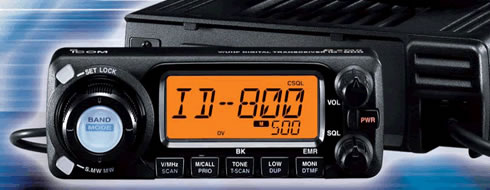
The Colorado Council of Amateur Radio Clubs (CCARC) and Ham Radio Outlet (HRO) teamed up to encourage the adoption of D-STAR technology in Colorado. To date, there are no D-STAR machines on the air in the state so HRO offered to provide equipment to a suitable ham radio group to help get things started. The CCARC, the repeater coordinating body for the state, agreed to assist in the selection process. According to the letter from the CCARC and HRO, the equipment grant was awarded to the Colorado D-STAR Association, a newly-formed group of radio amateurs in Colorado. The donated gear is a "full stack" of ICOM D-STAR repeaters: 2M, 70 cm and 1.2 GHz.