The internet keeps spewing forth a river of bits, some of it actually useful information.
Reliable sources tell me that the date for the 2013 Hamcon Colorado has been set: June 28-30 in Estes Park, Colorado. This event is the best hamfest in Colorado and happens every 4 years. (It is the ARRL Rocky Mt Division Convention which rotates between Colorado, Utah, Wyoming and New Mexico.) The date is a little later in the year than previous Hamcon Colorado’s which I think will be even better for attracting out of state visitors. The 2012 division convention will be held July 27-29 in Bryce, Utah.
The ARRL June VHF QSO Party is coming up on June 9-11. This is my favorite ham radio event of the year, since it stimulates VHF activity and (usually) has some good propagation on 50 MHz. Get on the air and have some fun!
For the EEs in the crowd, my friend Ken Wyatt (WA6TTY) is now writing an EMC Blog for Test and Measurement World. Ken is a industry expert on Electromagnetic Compatibility and a pretty darn good author as well.
This article in The Atlantic says that people are using their WiFi SSID to share their political position (“I Heart Obama”). This is sad, really sad.
Neil Armstrong is one my personal heroes, not just because he was the first man on the moon (I mean, if you believe that really happened). He has had every opportunity to promote himself as a celebrity but instead he keeps a low profile. I like that. I came across the video of an excellent (and rare) interview with him on an Australian web site.
There is a new ham radio podcast on the air: Ham Radio Podcast. Check it out and give it a try. And, in case you haven’t found this one, check out the Practical Amateur Radio Podcast by my friend Jerry Taylor (KD0BIK).
The ARRL has launched the digital version of QST magazine. It seems to work but it’s not a very satisfying experience on my little netbook. Probably better with a large monitor. See comments from AA6E and KE9V.
A while back, Yaesu published a white paper/brochure on VHF/UHF digital technology that slammed D-STAR for using GMSK modulation and stated that C4FM (4-Level FSK) is the way to go. See my previous posting on that topic. The paper also talked about DMR and APCO 25 as standards that use C4FM.
Page 14 of the document says:
At this point in time Vertex Standard believes the C4FM (4-level FSK) FDMA or TDMA are the most suitable selections for Amateur radio applications. In early 2012, we will release a C4FM (4-level FSK) FDMA Handy-Talky and a Mobile transceiver into the Amateur radio market. After our initial introduction, we plan to introduce a C4FM (4-level FSK) TDMA (2 slots) or TDMA Handy and Mobile transceiver into the Amateur market.
This led to speculation that we would see a Yaesu DMR or APCO 25 radio at the Dayton Hamvention. The topic was hotly debated in various online forums, with the prevailing theory being that it would be a DMR radio to play and compete with Motorola’s MOTOTRBO™ radios. It now seems that the initial introduction is the FT-1D, a dualband handheld that just does analog FM and a plain C4FM digital format (no DMR or APCO 25 protocol). This blog has the product brochure for the FT-1D. (Click on “Page 1” and “Page 2” links.)
The general reaction from the ham radio community is WTF, over? I don’t know why anyone would buy a radio to use with digital C4FM modulation. This digital mode is incompatible with D-STAR, DMR and APCO 25…the most common digital formats on the VHF/UHF ham bands. The quote listed above indicates that there will be more coming from Yaesu later in the year, that includes TDMA. This could be DMR but who knows?
At the direction of Congress, the FCC opened up Proceeding 12-91: COMMISSION SEEKS COMMENT ON EMERGENCY COMMUNICATIONS BY AMATEUR RADIO AND IMPEDIMENTS TO AMATEUR RADIO COMMUNICATIONS.
I decided to file my comments with the Commission, which can be read in full here. I’ll also provide the short version here:
1. The contributions of amateur radio operators during disasters and emergencies is substantial and well documented.
2. The key attributes that make the Amateur Radio Service so valuable in an emergency or disaster situation include the large number of trained operators available, the tendency for many amateur radio operators to prepare their stations for emergency operating conditions, the high degree of flexibility due to the wide range of spectrum and emission types available, and the ability of amateur radio operators to adapt to adverse operating conditions,
3. Restrictions from homeowners associations banning all external antennas is a serious and pervasive impediment to amateur radio emergency communications.
4. Limitations on emission type in Part 97 should be relaxed or eliminated.
5. There is the potential to improve the use of the Amateur Radio Service within the overall planning and organization of the federal government.
There are many different issues that could be highlighted but I decided to focus on these…with an emphasis on restrictive covenants.
What do you think? File your comments with the FCC here.
We recently sold the old white Jeep and bought a 2012 Wrangler (JK). After quite a bit of researching and experimenting with antenna mounting options, I finally got the ham gear installed in it. My objective is to get 2 Meter and 70 cm FM capability into the vehicle, using the Yaesu FT-7800 that I pulled out of the old Jeep. The big question was what to do about the antenna. The fiberglass hardtop does not make for a good antenna ground plane. Even if it did, during the summer months, we’ll sometimes take the top off to enjoy the open air ride.
The 2012 Jeep Wrangler Sport — Can you spot the antenna?
Initially, I planned to use the Arizona Rocky Road NMO antenna mount with a Diamond dualband antenna that is a 1/2 wave on 2 Meters. The 1/2 wave does not need a ground plane, so the performance is usually better with irregular mounting structures. However, I found that this antenna combination did not clear my garage door. I don’t like to have to remove or tilt a vehicle antenna to get in/out of the garage — my experience is that it usually just gets left in the “down” position. I tried a shorter 19-inch dualband whip antenna but its performance was dismal due to these factors: lack of a ground plane, being blocked by the vehicle body and poor grounding on the spare tire carrier. By the way, the grounding issue on the tire carrier (and many other technical topics) are discussed in these online forums: WranglerForum, JK-Forum. I think the Arizona Rocky Road mount would have been my preferred way to go (with the longer Diamond antenna), except for the garage issue. One problem I ran into with that mount is that the standard NMO mounts I have (the basic mounts with the cable attached) did not handle the thick steel of the mount. I had to purchase special NMO mounts made to handle thicker metal (see TheAntennaFarm.com).
The antenna mounting bracket near the hood, driver’s side.
I abandoned the Arizona Rocky Road approach and decided to use a simple NMO mounting bracket (Laird SBTB3400) on the driver’s side hood. Like all Wrangler antenna installations, this is a compromise. It is lower on the vehicle than I would like but it does not block the driver’s view. Other people have used a variety of “trunk lip” mounts to accomplish the same thing but be sure to check out the driver’s view before installing. Installing the mount was easy, just three holes drilled and three sheet metal screws.
The next question was where to install the radio. I took advantage of the FT-7800’s detachable control head, mounting it on the dash, while placing the radio under the driver’s seat. I attached the radio’s mounting bracket to the floor of the Jeep with two heavy sheet metal screws. This keeps the radio up off the floor in case water gets into the Jeep. However, it only provides about 1 inch of water clearance, so you hard core Jeepers that are used to flooding the interior of the vehicle during stream crossings may find this inadequate.
The radio body was installed under the driver’s seat
I have to admit that I ran into a significant problem at this point. There was not enough clearance around the radio mounting bracket to get all four of the screws installed that attach the radio to the bracket. In the end, I unbolted the drivers seat and tilted it back, which gave me room to insert and tighten the screws. More careful positioning of the radio mount might have saved me from this hassle.
It is always a bit of an adventure to find a way to route the power cable from the engine compartment to the vehicle interior. Fortunately, Jeep has made this very easy, but it is not obvious just by looking around. Fortunately, the folks on the various online forums have scoped this out and provided good advice.
I popped off the small side panel of the dash on the driver’s side, to expose a hole filled with foam (see photos).
The plastic panel on the driver’s side of the dash pops open to reveal a routing hole filled with foam
A stiff wire or coat hanger can be poked into this hole and the foam easily gives way.
A coat hanger is shown poking through the routing hole
And the coat hanger comes out the other side, right next to the antenna mount.
Coat hanger pokes through near the antenna mount
I routed the power cable and the antenna cable through this hole. I connected the power cable directly to the battery, which is the recommended approach to avoid alternator whine and other problems. I understand there is a similar routing hole on the passenger side but I did not verify that.
The last thing to figure out was where to mount the control head. Although it is a tight fit, I mounted it in front of the gear shift. (I have the 6-speed manual transmission…the automatic transmission gives you more room here.) The control head is very light, so I used stick-on Velcro (about an inch wide and four inches long) to attach it to the dash. This seems to work OK but I will admit that the attachment is just a bit wobbly…fine for turning volume and VFO knobs but the not so good for pushing buttons. Also, I’ll have to see if it shakes lose on bumpy 4WD trails. If so, I’ll fabricate a small bracket to provide better attachment.
FT-7800 Control Head and Mike Mounted to the Dash
In the process of exploring, I did take the dash apart to figure out what my options were. In retrospect, it was probably unnecessary due to where I eventually mounted the radio and control head. I found this youtube video to be very helpful in dismantling the dash.
Initial checkout shows that the radio installation is working fine. I was pleasantly surprised that the antenna SWR was quite good (<1.5) over the bands of interest. I will use the short 19-inch whip most of the time but I can swap out other NMO mount antennas (including the Diamond dualband antenna I mentioned earlier.)
I appreciate all of the info out on the interwebz concerning JK radio installs and I am passing along what I learned to assist other folks with their Jeep installations.
– 73, Bob K0NR
Update 20 June 2012:
It turns out that the Velcro (hook-and-loop fastener) approach did not work. The Velcro attachment itself was pretty reliable but the stick-on adhesive failed after a few weeks. I used a couple of L-shaped brackets to attach the control head to the dash and it seems to be working fine. I have used Velcro successfully in past installations but in situations where the control head was positioned on top of the center console so the main purpose of the Velcro was to prevent horizontal movement. In other words, the Velcro did not have to support the entire weight of the control head, just keep it from moving around.
Update 8 June 2014:
A number of people have emailed me to ask about the sturdiness of the antenna installation. The vehicle sheet metal that the mount attaches to is not all that thick, so they are worried about putting stress on it and having metal fatigue over time. I have inspected this several times now and it is not showing any signs of wear. The antenna I use is small and lightweight so it does not put much load on the antenna mount. I would be more concerned if the antenna was massive, so keep that in mind when you choose your NMO antenna.
The April 25th issue of Contest Update from the ARRL had this item:
The ARRL Programs and Services Committee has approved a rule change for ARRL VHF+ contests effective beginning in 2013 (not this year) to create a Single-Op FM-only category (100 W max, 50/144/222/440 MHz) and a three-band Single-Op category (100 W PEP on 50 and 144 MHz, 50 W PEP on 432 MHz). These changes will apply to the January, June, and September contests – again, beginning with the 2013 January VHF Sweepstakes.
I am always looking for ways to get more people involved in VHF contests and these two new categories may help. The basic idea is to create categories for simpler stations to participate in the contests without having to be in the same category as The Big Guns.
A few weeks back, I was wasting time doing important research on the internetz when I came across the Baofeng UV-5R Dualband Handheld Transceiver. This radio seemed to have a boat load of features but the sale price was $65. So I am thinking to myself, just how good is a $65 radio?
The last time I went out to a nice restaurant, I blew through $65 pretty quickly so this was not going to be a large purchase. In fact, I realized that we now have HT’s priced low enough to be an impulse buy. As one of my ham buds told me, “filling up the gas tank of my truck costs more than this radio!”
So, of course, I soon broke down and ordered one and it showed up on my doorstep a few days later. I’ve been using it off and on for a few weeks now. I’ve also noticed that there is a real buzz on the interwebz about this little radio. There is usual Yahoo Group (baofeng_uv5r) and youtube videos.
Here’s the short story:
While not perfect, for $65, this radio is impressive.
Besides using the radio and receiving good signal reports, I did check the receive sensitivity, transmit power and frequency — all good. There are quite a few reviews out there, so take a look at articles by W0HC, PD0AC and OE1RFC. Also, there have been quite a few reports of quality problems with this radio…probably more defects than equipment from the more established ham equipment vendors. See the Yahoo Group discussion to understand this better.
Similar to other radios from China, this radio has a quirky user interface…not as easy to use as my Yaesu FT-60. This means that the programming software is a necessity to get the radio set up correctly, which is the major downfall of the rig. The free software program is crapware, with many people reporting a variety of problems with installation and operation. I did finally get it to work, but it was very frustrating.
I find myself grabbing this HT when I head out the door and leaving my other radios sitting in the desk charger. Someone pointed out to me that the low price of this radio makes it an easy choice — if it gets dropped, broken, lost or stolen, I am only out a tank of gas. While I am kidding about the “disposable radio” idea, the low cost does affect how I use it.
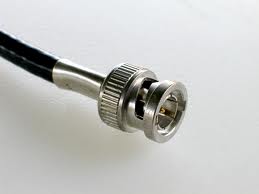
I had previously commented on the how most of the handheld radios are adopting SMA connectors instead of BNC connectors. See Say Goodbye to the BNC. For example, the Yaesu FT-60 uses a female SMA connector for the antenna connection. I’d say this is the standard approach for the amateur radio market.
Female SMA on Yaesu FT-60
A few manufacturers have decided to use the male SMA connector as the antenna connection for their handheld radios. I suspect that these manufacturers are following the lead of commercial manufacturers (e.g., Motorola) who use the male connector.
Male SMA on Wouxun KG-UV2D
Many hams will want to adapt these SMA connectors back to the good old BNC, to connect to existing BNC connectors or HT antennas. I had commented that these adapters are mechanically weak but recently I have come across some more sturdy adapters.
SMA-BNC Adapters
The adapter in the center is the common adapter for cable use but arguably mechanically weak for adapting HT antennas. The adapter on the left adapts BNC antennas to an HT with a male SMA connector. The adapter fits snugly on the top of the HT and provides mechanical support. Similarly, the adapter on the right adapts BNC antennas to an HT with a female SMA connector.
I have just started to use these more capable adapters so I am not sure how reliable they are in regular use. In any case, it makes sense to be careful to minimize the strain on any radio connector.
It figures: I just get done blogging about the history of electronic communications and Google takes the topic to the next level. Recognizing the inherent problem of cramming a QWERTY keyboard onto a Smart Phone, Google has gone back to the future by adopting a simple binary input device that uses DOTS and DASHES. That’s right, the new Gmail Tap uses Morse Code.
Google has apparently rediscovered what CW operators knew all along: Morse Code is extremely efficient for text communication.
Humans have always had a desire to communicate. They started out just talking to each other but then found that it was really handy to be able to write things down. This caused the invention of the alphabet and the training of English teachers to explain overly-convoluted rules of grammar.
In 1831, Joseph Henry was playing around with electric circuits and came up with the idea of a telegraph. We can imagine a simple system where ON means “time for dinner” and OFF means “not yet”. This wasn’t good enough for Samuel Morse, who invented the Morse Code which could use ON and OFF to represent the entire alphabet. This was the first digital code and was used for important messages such as “Laughing Out Loud”, later abbreviated to LOL. This was basically the same as modern text messaging but you needed a trained telegrapher to do it.
In 1875, an inventor named Bell decided that it would be better if you could just talk over the wires instead of messing around with Morse Code. This will be a recurring theme — whether to talk to other people or just send digital codes. Bell invented this thing called the telephone, which is still used today. Basically, a person could talk into one end of a wire and have his voice pop out of the other end.
Later a guy named Marconi came along with the idea that communication should not depend on wires. For example, it was quite inconvenient to drag a telephone wire behind a ship as it moved across the sea. Unfortunately, Marconi didn’t know how to do voice over the wireless, so he dropped back to using Morse Code. ON and OFF is a much easier way to go. Although there is a persistent rumor that Marconi intentionally used Morse Code to torment future generations of FCC Licensed Amateur Radio Operators, I can find no evidence of this. Some people argue that Nikola Tesla invented wireless but I think he had to be disqualified for overloading and shutting down the Colorado Springs power grid on numerous occasions.
Again, not wanting to be limited by trained telegraphers, voice communication (originally called Amplitude Modulation, but now known as Ancient Modulation) was invented. We are not sure who first came up with Ancient Modulation, but there are a bunch of radio hams on 75 Meters still trying to perfect it.
Somewhere around 1973, Motorola figured out that what the world really wanted was a portable phone that everyone could carry around in their pocket. The first attempt at this was the Motorola DynaTAC, which required an enormous pocket to carry it in. Knowing that customers were not going to enlarge their pockets, various mobile phone manufacturers worked feverishly to reduce the size of these phones.
Unfortunately, the mobile phone manufacturers terribly miscalculated, thinking that people would want to actually talk on these phones. As text messaging was added to these phones, it was discovered that most people, especially those under the age of 30, preferred to send cryptic text messages rather than actually talk to anyone. It was also discovered that all forms of human thought can be captured as 140 character messages. Although it was tempting to apply Morse Code to digital text messaging, it was rejected in favor of the ASCII 8-bit code. Instead of using ON/OFF keying, text messages are normally sent with a tiny keyboard patterned after a full-size typewriter (now obsolete).
You’ve probably run into this situation…some of the more experienced radio amateurs commenting about how so many of the newer hams are incompetent. “Yeah, they’ve dumbed down the FCC exam, so now anyone can get a license. Back when I got my license, I had to copy Morse Code in my head, design a triple-feedback-loop vacuum tube amplifier and recite the Gettysburg address backwards in front of an FCC examiner.”
A while back, I wrote about the time when a newbie on an email list asked a simple electronics question and got this reply: Not to pick on you, but is there any requirement these days to have a basic knowledge of electricity and/or radios to get a ham license?
Often this shows up as an elitist attitude of If you don’t pursue the hobby my way or at my level, then you are doing it wrong.
Since amateur radio consumes most, but not all, of my hobby time, it is easy to lose perspective on this. And, yes, I am sure I have complained about clueless newbies and LID operators from time to time.
It’s interesting to put the shoe on the other foot and think about activities that I pursue with much less time and intensity. In other words, think about activities where I am not that experienced and certainly not an expert.
For example, I enjoy fishing but I am really not that skilled at it. For me, fishing is just an excuse to sit next to a stream and enjoy the scenery. If I catch fish, that is a plus (but I always throw them back in anyway). When I encounter Real Fisherpersons, they are usually friendly and helpful, passing along a few tips on what they using for bait, etc. Sometimes I will encounter That Fly Fishing Guy that looks down his nose at any form of fishing that does not meet his high standard.
I also enjoy photography. I have a decent Canon DSLR camera with a few lenses and I manage to capture some reasonably good photos that way. (This probably has more to do with the quality of the camera than the photographer.) My interest is mostly to capture experiences and events in my life and create photos that I can use in my various writing activities. But I know a number of people that are infinitely more skilled than I am. They are generally very helpful and I usually manage to learn something from them. Come to think of it, I have not encountered very many condescending photographers — most of them have been very helpful. Maybe I have just been lucky.
Although it’s a cliche, Life is Too Short. There are so many things we can choose to do with our time and, really, so little time to do it. People must make choices about how deep they get into any activity, all while balancing family time and demands at work. It shouldn’t surprise us when some people choose to be part-time hams and don’t aspire to be the expert in all things radio.
And the final point is, if you think you have something to offer to the newbies, make sure you come across as helpful and make sure it looks like you are having fun. Being the Old School Grumpus will not attract people to your favorite activity. Having fun and inviting them in will!
I’ve been using WordPress for my weblog for years now and just turned on a mobile version of the blog. The WordPress plugin WPtouch makes this very easy to do. It took about 5 minutes to get it up and running.
The WPtouch plugin automatically detects when the user is browsing with a smartphone and implements the mobile interface. The user has the option of turning the mobile presentation off.
There was a discussion on Google+ the other day about how a particular handheld transceiver has an SMA connector, instead of the venerable BNC connector. I noted that many of the newer HTs are going with SMA, presumably because of the smaller size. In fact, I started thinking about it…I didn’t think you can buy an HT anymore with a BNC.
I took at look at some of the ham radio dealer websites to see if I was right. These radios all have SMA connectors: Alinco DJ-175T, DJ-C7T, DJ-G7T, DJ-G29T, DJ-V17T, DJ-V57T; ICOM IC-80AD, IC-92AD, IC-T70A, ID-31A: Kenwood TH-D72A, TH-F6A, TH-K20A; Yaesu FT-60R, FT-250R, FT-270R, VX-3R, VX-6R, VX-7R, VX-8R. The Wouxun radios are SMA but with a male connector on the radio (opposite gender compared to the other manufacturers…a topic for another day.)
But I did find three ICOM models that have BNC connectors: IC-V80, IC-V82, IC-U82.
The trend line is clear…the BNC is on the way out for amateur radio handheld transceivers.
Do I care?
Well, yes, I do.
I have a collection of extended length antennas that are much more efficient than the standard dummy load rubber duck. These are great for portable operation, mountaintopping, etc. I have not found very many of these antennas available with SMA connectors. Even if they were available, I am not sure I’d want to attach them to an SMA connector on an HT. For example, a 1/2-wave 2-Meter antenna is about 38 inches long — I am skeptical that an SMA provides enough mechanical strength to support it. Even with a BNC, I have always been very careful to not put too much strain on the connector.
We will have to see where this leads but it seems that the BNC will fade away for amateur use. Most mobile and base rigs use PL-259 and/or N connectors so HTs have been the main application for a BNC.
Goodbye, BNC, I am going to miss you.
73, Bob K0NR
Update on Feb 24: I’ve had several people suggest to me “just use a BNC-to-SMA adapter.” This certainly takes care of making a good electrical connection but mechanically they are generally weak.
There’s lots of information spewing forth from the interwebznet. Here are a few items of interest.
Dan KB6NU has started doing an Extra Class Question of the Day on his blog. I think this is a great idea. I may need to borrow steal reuse this idea on my blog.
The Fi-Ni Report did their usual outstanding job of educating the ham community, this time via A Short History of QSLing. Just because something is fictional,doesn’t mean that it’s not real.
The ARRL announced that the Logbook of the World is going to support the CQ Awards. This is great news for the ham community. The more awards that are supported, the more usage LoTW will get, making it more useful for additional awards.
Buried in the minutes of the July 2011 ARRL Board of Directors Meeting, the Board “authorizes staff to proceed with planning and negotiating a vendor agreement for a Digital QST edition, to be approved by the CEO, General Counsel and the Administration & Finance Committee.” So QST will be available in digital format soon.
You know, I think this internetz thing is starting to catch on!
ARRL Field Day is the single most popular on-the-air event held annually in the US and Canada. Each year over 35,000 amateurs gather with their clubs, friends or simply by themselves to operate.
At our local radio club meeting this week, I did a presentation on amateur radio operating awards. The emphasis was on the most common awards: Worked All States (WAS), Worked All Continents (WAC), DX Century Club (DXCC) and VHF/UHF Century Club (VUCC).
I talked a bit about how to obtain a QSL card for written confirmation of a radio contact. As I discussed using the QSL Bureau, it became clear that this is the kind of thing that a new ham might not learn on their own. In fact, they might not know this even exists.
The “Buro”, as it is often called on CW, is really two separate systems: The Outgoing QSL Bureau and the Incoming QSL Bureau. To use the Outgoing QSL Bureau, you need to be an ARRL member and send your outgoing cards to ARRL HQ. They are forwarded on from there to the other country and ultimately to the other amateur. See the Outgoing QSL Bureau information on the ARRL web site for the full story.
The Incoming QSL Bureau delivers cards coming in from other countries. This work is handled by various radio clubs, organized by call area. You do not need to be an ARRL member to use the incoming service. You can find the incoming QSL bureau for your call area here on the ARRL web site. My callsign is KØNR, so I use the WØ QSL Bureau which has this web site: http://www.zeroburo.org/ The WØ QSL Bureau is operated by the Mississippi Valley DX/Contest Club. Thanks, Guys!
Now here is the important part:
If you have worked any DX stations, you may have QSL cards waiting for you at the buro. You should supply your QSL bureau a Self-Addressed Stamped Envelope, which they will use to send you any cards that are waiting.
Look up your Incoming QSL Bureau and follow their specific instructions concerning supplying them with envelopes.
Monument, Colorado
Saturday April 21 and Saturday April 28 (8 AM to 5 PM) 2012
Location: Tri-Lakes Monument Fire Station 1
Sponsored by the Tri-Lakes Monument Fire Radio Association
The Technician license is your gateway to the world-wide excitement of Amateur Radio…
Earn your ham radio Technician class radio privileges
Pass your FCC amateur radio license exam right in class on the second day
Multiple-choice exam, No Morse Code Required
Live equipment demonstrations
Learn to operate on the ham bands, 10 Meters and higher
Learn to use the many VHF/UHF FM repeaters in Colorado
Find out how to participate in emergency communications
There is no cost for the class (donations accepted)
However, students must have the required study guide:
Gordon West Technician Class guide, 7th Edition $20.95
And pay the FCC Exam Fee: $15.00
Advance registration is required (no later than April 15th, earlier is better!)
To register for the class, contact: Bob Witte KØNR
Email: bob@k0nr.com or Phone: 719 659-3727
For more information on amateur (ham) radio visit www.arrl.org or www.wedothat-radio.org
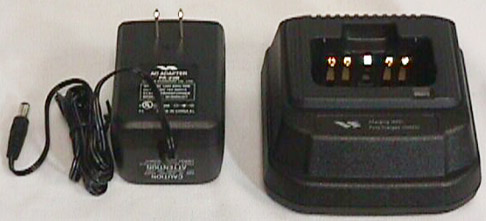
I’d like to pass along a tip that has taken me about 25 years of ham radio experience to figure out. I’ve owned many different models of handheld FM transceivers through the years and have always just used the standard “wall wart” charger to charge the batteries.
Recently, I decided to “splurge” and get desktop chargers for the pair of FT-60’s that inhabit our two-ham household. I never realized how handy the drop-in style charger could be until I had one…the HT is always sitting there ready to go. Most of these drop-in chargers are rapid chargers that sense the battery condition — charging them quickly but also dropping back to a trickle charge once they are full.
Since then, I’ve made it a point to always pick up a desktop charger with a new HT. Yes, it does cost $60 to 75 extra but it is well worth the convenience.
Operating a ham radio on top of a mountain during winter may seem like the act of a person with only one oar in the water (or shall we say one half of a dipole in the air?). But actually, we’ve had quite a few days of favorable weather that have been begging us to get outdoors in December. Still, I am on guard for an activation by Jerry in the middle of a blizzard, as he seems a bit smitten by this SOTA thing.
Episode 49 of PARP introduces the SOTA concept near the end of the episode, which is followed by a deeper SOTA discussion in Episode 50. These two episodes run about 25 minutes each, so take some time out to give them a listen.
This just in from the Things That Make You Go Hmmm Department: the amateur radio portion of Yaesu splits from Mother Motorola while the land mobile portion stays. This is right on top of an announcement that Yaesu will pursue a digital amateur radio offering based on land mobile technology (i.e., definitely not D-STAR).
 The internet keeps spewing forth a river of bits, some of it actually useful information.


 A few weeks back, I was